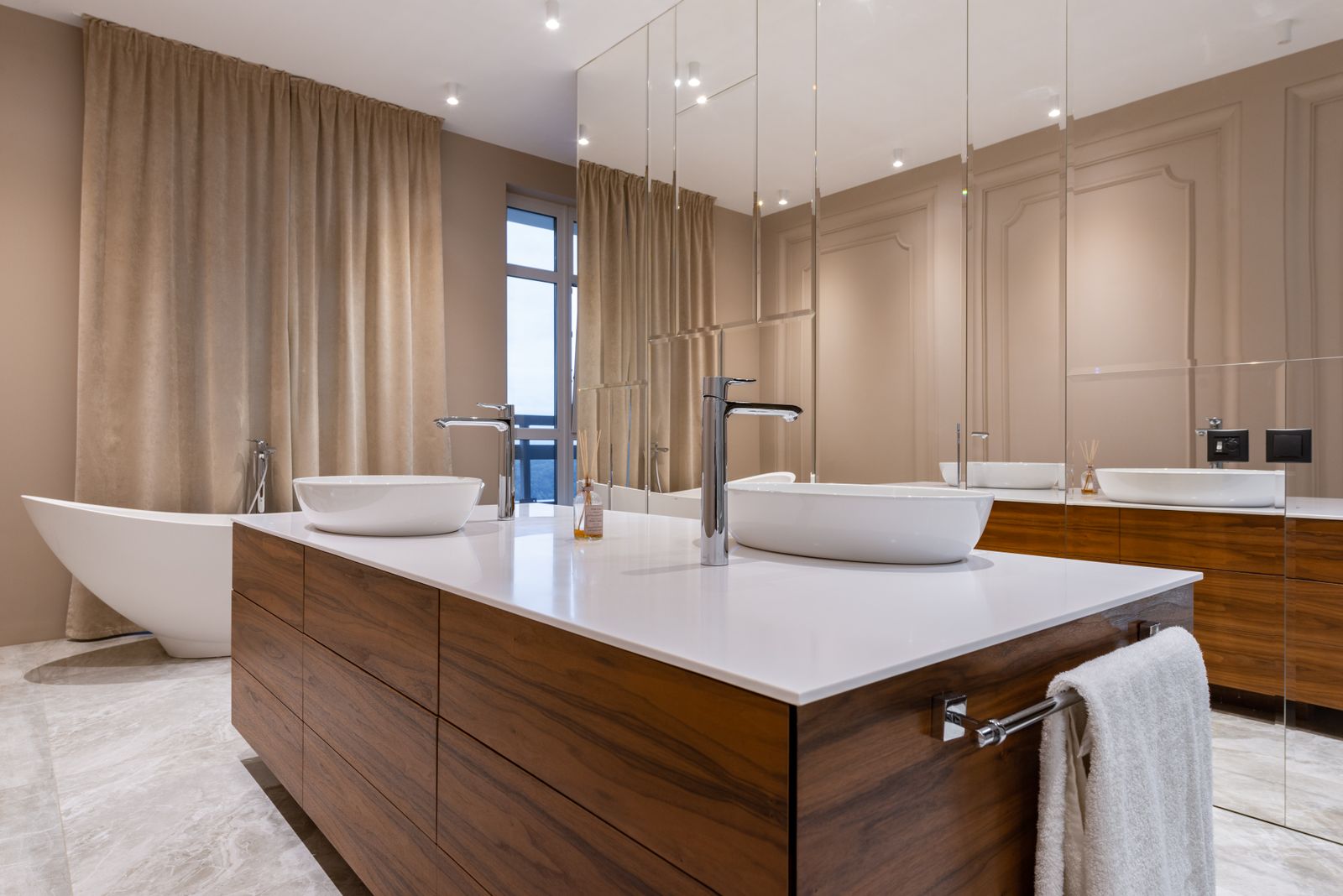
For a small Watford or Rickmansworth bathroom — 4 to 8 square metres — the underfloor heating question is almost always electric versus wet, not whether. A cold tile floor is the single most common thing our clients regret leaving out. Here's how we choose between the two systems on every project, and where each one wins.
Electric mats: the case for
Electric underfloor heating (typically Warmup, Prowarm or Devi) is a 3-4mm heating mat laid directly over the tanking membrane, under the tile adhesive. In a compact bathroom it's the pragmatic choice: install cost is £250–£450 for the mat and thermostat, labour is 2–3 hours, no changes to the boiler or manifold. It heats quickly (12–20 minutes to warm the floor), so it's ideal for the 30 minutes a day most bathrooms are actually used.
Electric mats: the case against
Running cost. A 6m² mat at 150 W/m² pulls around 0.9 kW; run it for two hours a day at 30p/kWh and you're at roughly £160 a year. For a bathroom used 30 minutes twice a day that's often fine. For a family bathroom running 4-plus hours daily, wet becomes cheaper within 3-4 years.
Wet systems: the case for
Wet underfloor heating runs your existing combi or system boiler water through pex-pipe circuits set into a screed. Running cost drops to roughly 30-40% of an electric mat, because you're using the gas boiler at 4:1 efficiency rather than electricity directly. In a whole-bathroom-plus-en-suite scheme, or a bathroom that gets 4+ hours of daily use, wet is the long-term winner.
Wet systems: the case against
Depth and complexity. Even a low-profile wet system needs 15-18mm of screed above the pipe, versus 3-4mm for electric. That's a real headroom problem in a 1930s Watford semi with existing 2.35m ceiling heights, or a bathroom with a door that already only just clears the tile floor. Install cost is higher — typically £600–£900 supply and fit for a small bathroom, before boiler manifold changes. Response time is slower (30-45 minutes to warm), so it wants to be on a timer.
The 4-question decision framework
We ask every bathroom client the same four questions before recommending a system. (1) How many hours a day will the bathroom be used? Under 2, choose electric; over 4, wet. (2) Is there a wet system elsewhere in the house we can extend? If yes, wet becomes materially cheaper. (3) What's the finished floor build-up allowed? Under 20mm, electric only. (4) Is the boiler a combi with spare capacity or a system boiler on a fully commissioned manifold? Combi limits parallel demand — electric sidesteps that entirely.
Thermostats matter more than the wire
Whichever system you pick, spend on the thermostat. A dual-sensor programmable stat (Warmup 4iE, Heatmiser Neo) with a floor probe and a room probe pays back in year one — it stops the floor overheating and dumping wasted heat, and it lets you set a wake-up preheat rather than running the floor continuously. A basic stat can double your running cost.
Insulation is not optional
Below either system we always specify a 6-10mm foil-backed insulation board (Marmox, Wedi, Jackon). Skipping it in a solid-floor ground floor bathroom means heating the concrete slab beneath — 40% of your output goes down instead of up. On a suspended timber floor, the board also stops the joists rocking a stiff tile.
Our default in a small bathroom
For a Watford or Rickmansworth en-suite or family bathroom under 8m², we default to electric on Marmox insulation with a Warmup 4iE stat. It's cheaper to fit, doesn't compromise headroom, warms quickly, and the higher running cost is trivial at 2 hours a day. For a whole bathroom-plus-en-suite spec or a system-boiler house with an existing manifold, wet.
Looking for a bathroom in rickmansworth? Explore our service →
Keep reading
10 Kitchen Renovation Ideas for Rickmansworth Homes Under £12k
Ten bespoke kitchen ideas — from layout tricks to lighting and worktops — that deliver a premium finish for Rickmansworth homes on a £12k budget.
The Best Bathroom Tiles for Wet Rooms in 2026
Choosing tiles for a wet room is half aesthetics, half engineering. Our guide covers slip ratings, porcelain vs natural stone, grout choices, and what we use on every project.